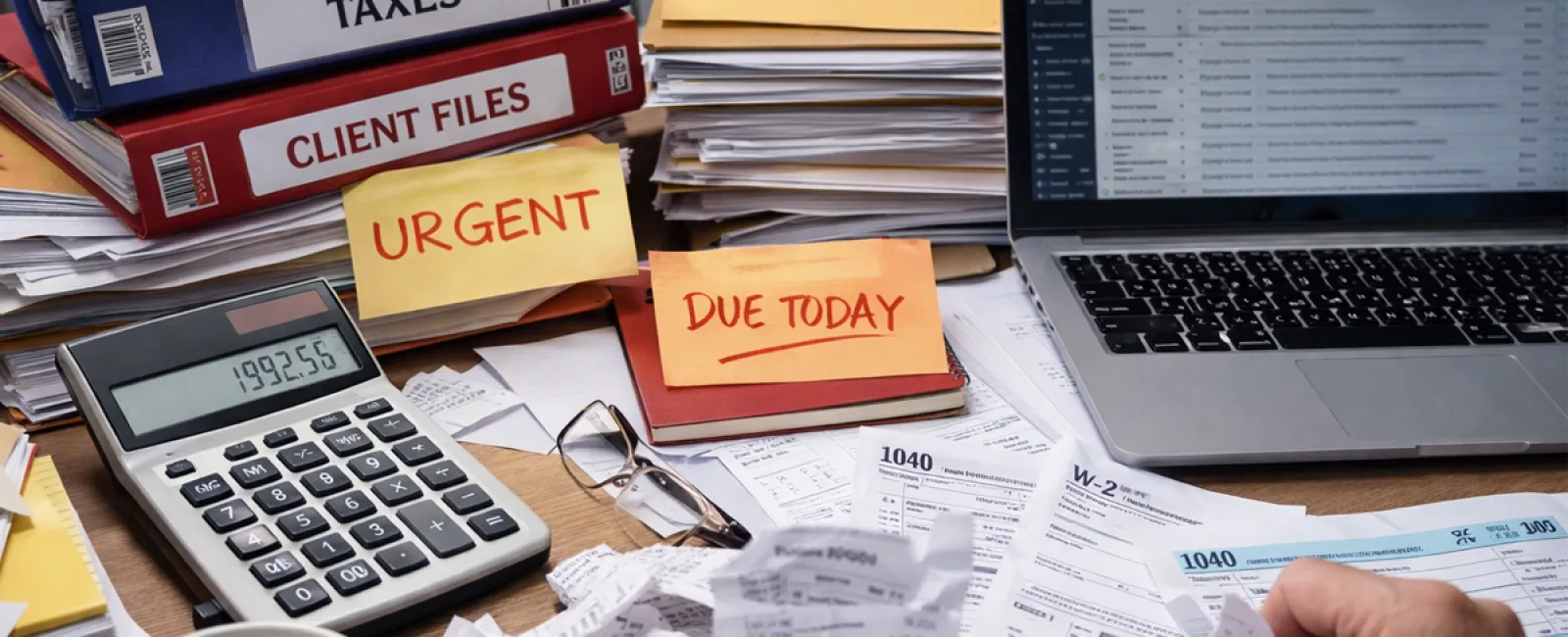
It's March — tax season is in full swing.
Your accounting team is overwhelmed, bookkeepers are racing against deadlines, and inboxes overflow with urgent emails.
Everyone is focused solely on getting through this busy period.
This hectic rush isn't a secret to you.
And it certainly isn't a secret to cybercriminals.
Security experts report a sharp rise in phishing attacks during tax season, with March witnessing about a 28% surge in tax-related scam emails compared to other times of the year. These fraud attempts are subtle, crafted to mimic typical business communications right when your team is stretched thin.
This isn't accidental.
It's strategic timing.
Let's explore the threats ahead and explore four straightforward ways to safeguard your business from becoming an easy target.
How Tax Season Disrupts the Supply Chain
Many overlook this crucial fact:
Cyber attackers don't only focus on accounting departments.
They exploit the turmoil surrounding tax season.
During this peak period:
- Clients hurriedly send sensitive financial documents.
- Staff skip regular verification processes to keep pace.
- Requests like "Just send me the file" override typical caution.
- Verification steps are ignored amid heavy workloads.
The entire workflow accelerates.
And where speed increases, so do costly mistakes.
Hackers target businesses under pressure,
not those that operate methodically.
March is precisely that hectic.
Recognizing What These Attacks Look Like
This isn't fiction.
It's usually an email indistinguishable from the others clogging your inbox.
- An email "from your accountant" requesting a resend of W-2s due to a delivery issue.
- A vendor message stating that their bank details have changed and require updating.
- A DocuSign notice for a tax form that "needs your signature immediately."
- An urgent note from someone impersonating your CEO asking for immediate assistance while traveling.
These messages don't raise alarms.
They feel like routine business communications during March.
That's exactly why they succeed.
Why Even Vigilant People Fall Victim
It's not carelessness.
It's human nature.
With overflowing inboxes and pressing deadlines, people tend to skim messages, make assumptions, and react quickly.
Scammers exploit this behavior.
Their emails target those rushing too much to notice subtle inconsistencies. They don't rely on recklessness — just haste.
And in March,
almost everyone is rushing.
Four Practical Steps to Avoid Becoming a Target
The good news: you don't need advanced technology or expert security teams.
Just implementing a few deliberate habits during hectic periods can drastically lower your risk.
1. Always Confirm Payment Changes By Phone
If you receive an email about changes to vendor banking info, don't reply to that email.
Instead, call a verified number you already trust to confirm.
Adopting this practice protects you from some of the costliest scams.
2. Take Your Time on Sensitive Requests
Urgent requests are a red flag to slow down, not speed up.
If someone demands W-2s, tax files, or financial data "immediately," pause and verify before acting.
Genuine contacts won't mind a brief delay; fraudsters will.
3. Double-Check Urgent Emails Through Another Channel
If an email claims urgency, reach out via phone, text, or internal chat to confirm.
This quick verification can prevent costly mistakes.
True emergencies withstand a two-minute check; false ones won't.
4. Alert Your Team About Scam Risks
This week, remind your staff that tax season is peak scam time.
Encourage them to slow down, double-check details, and ask questions if anything feels suspicious.
A little permission to be cautious now saves a lot of trouble later.
Key Takeaway
Tax season is stressful enough — don't let a scam add to your burdens.
These attacks aren't especially sophisticated — just well-timed.
They depend on your team being rushed, making assumptions, and pushing through busy March workloads.
You don't need a complete system overhaul to avoid becoming a victim.
Simply slow down when it counts and verify urgent requests carefully.
That approach often suffices.
Busy Season Vulnerability Check
Your business may already have strong protocols—and if so, that's fantastic.
But if tax season tends to push your team into reactive mode, or you're uncertain how urgent requests are managed under stress, a quick review could prove invaluable.
Schedule your free 15-Minute Discovery Call with us.
No pressure or scare tactics—just a clear assessment of whether small habit changes can prevent major headaches this season.
If this message isn't relevant to you, please share it with someone who could benefit.
Click here or give us a call at 858-202-0304 to schedule your free 15-Minute Discovery Call.